








 English
 Français
 Deutsch
 Italiano
 Español

Non-fiction
Family
 Pubblicato 27 gen 2026
Aggiornato 27 gen 2026
Pubblicato 27 gen 2026
Aggiornato 27 gen 2026
 15 min

Non-fiction
Family
Pubblicato 27 gen 2026
Aggiornato 27 gen 2026
15 min



 Contribuisci
Intergenerational Trauma Transmission and the Path to Resilience
Transmission du traumatisme intergénérationnel et chemin vers la résilience : Une étude de cas
Introduction : Le contexte biographique et psychologique de Herta Bertel (née Krug)
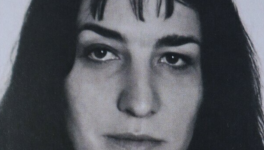
Ce document présente un récit biographique détaillé et l'analyse psychologique subséquente de Herta Brigitte Bertel (née Krug) (1943-2024), en se concentrant spécifiquement sur les mécanismes de transmission du traumatisme intergénérationnel observés dans sa relation avec son fils unique, Peter Siegfried Krug. Née Herta Brigitte Krug à Salzbourg, son enfance a été caractérisée par une instabilité et une privation profondes. En tant qu'enfant « illégitime », elle a subi une enfance fragmentée, passant ses années de formation dans divers foyers d'accueil et fermes à Lessach, au Lungau. Cette période a été marquée par une détresse existentielle, incluant des épisodes de famine nécessitant une hospitalisation, et un travail forcé sans possibilité de jouer, ses seuls jouets étant des objets trouvés comme des « bâtons ». Un facteur critique de son développement fut l'expérience d'une honte publique sévère liée à l'énurésie, menant au spectacle public d'être forcée de traverser le village avec un drap trempé d'urine. Cette confluence d'abandon précoce, de négligence et d'humiliation chronique a établi une identité ancrée dans la honte et une disposition de vie définie par la mélancolie, l'anxiété et une hypervigilance pour la sécurité.
Herta Bertel : Une vie définie par le mode survie
La vie adulte de Herta Bertel est devenue une compensation psychologique élaborée du traumatisme de son enfance. Malgré l'accession à une mobilité sociale — mariage avec un médecin, le Dr Michael Bertel (m. 1977), carrière de secrétaire à l'autorité sanitaire de Salzbourg et acquisition d'un appartement spacieux — son état interne est resté fixé en « mode survie ». Cela s'est manifesté de plusieurs manières clés :
- Constriction émotionnelle et mélancolie : Son apparence physique était décrite comme décharnée et son comportement était constamment sérieux, mélancolique et triste, avec une incapacité notoire à rire ou à s'engager avec joie. Cette restriction affective est une manifestation psychologique classique d'un traumatisme chronique non résolu.
- Fixation sur le statut externe et la sécurité matérielle : Les symboles de statut social, tels que la profession, le revenu sûr et la propriété, sont devenus le sommet de son système de valeurs. Ce focus intense agissait comme un mécanisme de défense, consolidant la sécurité matérielle et sociale qui avait fondamentalement manqué à sa petite enfance, supplantant les intérêts intellectuels de son jeune âge adulte (ex. lecture de Dostoïevski, musique classique).
- Évitement des foules et régulation somatique : Son besoin de se retirer dans la nature, fuyant les foules et pratiquant la randonnée en montagne de manière intensive (400 000 mètres de dénivelé cumulés), servait de stratégie de régulation somatique vitale mais compulsive pour traiter le stress internalisé et l'hyper-excitation issus de la honte sociale.
Le mécanisme de transmission du traumatisme intergénérationnel
La naissance de son fils, Peter Siegfried Krug (né en 1966), est devenue le point central de l'activation et de la transmission du traumatisme non résolu de Herta Bertel :
- Réplication de l'abandon : Ayant été elle-même une enfant « illégitime », elle a reproduit le traumatisme primaire en plaçant immédiatement son fils dans un foyer pour nourrissons, puis dans un foyer d'enfants jusqu'à l'âge de six ans. Elle a renoncé à l'identité du père biologique (le Dr Peter Strobl) et à toute demande de pension alimentaire, scellant ainsi le destin de son fils à une enfance de pauvreté et de déracinement émotionnel, miroir de sa propre dépossession.
- Projection et indisponibilité émotionnelle : Les visites hebdomadaires au foyer étaient marquées par le mutisme et des « accusations de culpabilité permanentes » envers le jeune enfant. Elle ne jouait jamais avec lui et était incapable d'un dialogue normal. Sa honte non résolue a été projetée sur son fils, étiqueté comme « raté » et « bon à rien » durant sa scolarité.
- Impact psychologique sur le fils : Ce fardeau constant a entraîné un doute de soi rongeur et une anxiété de performance, rendant impossible la concentration ou la motivation intrinsèque à l'école. L'enfant a été forcé de porter la dette psychologique non résolue de la mère.
Le chemin vers la résilience et l'estime de soi
La vie du fils adulte est devenue un effort conscient pour briser la spirale traumatique :
- La limite absolue : L'intervention psychologique critique fut la rupture totale de contact en 2011, maintenue jusqu'au décès de la mère en 2024. Ce geste drastique était un acte de protection nécessaire pour préserver l'intégrité psychique du fils contre une destruction émotionnelle continue.
- Libération cognitive et émotionnelle : Le changement de paradigme a consisté à passer de la condamnation personnelle de la mère à la compréhension analytique que son comportement destructeur n'était que la manifestation de ses propres blessures fixées en mode survie.
- Réfutation ultime et réalisation de soi : L'obtention du titre de Maître FIDE (FM) en composition d'échecs après 51 ans représente la réfutation objective ultime des projections négatives de la mère. Son rôle d'auteur et de défenseur des victimes d'abus en foyers symbolise la transformation de la douleur personnelle en une mission publique.
Conclusion : L'héritage du traumatisme non résolu
La vie de Herta Bertel illustre les effets dévastateurs à long terme d'un traumatisme complexe de l'enfance. L'analyse montre comment un parent, figé en mode survie, transmet inconsciemment sa honte et sa culpabilité à la génération suivante. Le parcours du fils — culminant dans la rupture absolue et la réalisation de soi ultérieure — démontre le processus ardu pour briser la pathologie du traumatisme hérité.
À propos de l'auteur : Peter Siegfried Krug
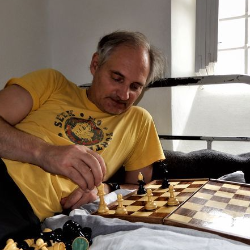
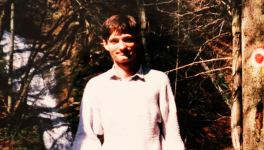
Peter Siegfried Krug (né en 1966) est un auteur, documentariste et Maître FIDE en composition d'échecs. Son œuvre est centrée sur la documentation du traumatisme complexe, particulièrement les abus institutionnels. Maître FIDE (FM) internationalement reconnu, il a atteint ce titre à un âge avancé, témoignant de sa résilience. Krug est également professeur de yoga certifié (RYT). Ses écrits sont caractérisés par un engagement radical envers la transparence. Il vit actuellement en Autriche avec sa compagne, l'auteure et activiste Lucia Nadia Cipriani. Sa mission est de placer la question des abus en foyers au premier plan du débat public.
Intergenerational Trauma Transmission and the Path to Resilience: A Case Study
Introduction: The Biographical and Psychological Context of Herta Bertel (née Krug)
This document presents a detailed biographical account and subsequent psychological analysis of Herta Bertel (née Krug) (b. 1943, d. 2024 - Salzburg, Austria), focusing specifically on the mechanisms of intergenerational trauma transmission observed in her relationship with her only son, Peter Siegfried Krug. Born Herta Brigitte Krug in Salzburg, her early life was characterized by profound instability and deprivation. As an "unmarried child," she was subjected to a fragmented childhood, spending her formative years in various foster homes and on farms in Lessach, Lungau. This period was marked by existential need, including episodes of starvation requiring hospitalization, and forced labor without the opportunity for play, with only found objects such as "sticks" serving as toys. A critical factor in her development was the experience of severe public shaming associated with bed-wetting, leading to the public spectacle of being forced to wander through the village with a urine-soaked sheet. This confluence of early abandonment, neglect, and chronic humiliation established a deep-seated shame-based identity and a lifelong disposition defined by melancholy, anxiety, and a hypervigilance for security.
Herta Bertel: A Life Defined by Survival Mode
Herta Bertel’s adult life became an elaborate psychological compensation for the trauma of her childhood. Despite achieving social mobility—marrying a doctor, Dr. Michael Bertel (m. 1977), and securing a career as a secretary at the Salzburg Health Authority and acquiring a substantial freehold flat—her internal state remained fixed in "survival mode." This manifested in several key ways:
- Emotional Constriction and Melancholy: Her physical appearance was described as gaunt, and her demeanor was consistently serious, melancholy, and sad, with a noted inability to laugh or engage joyfully. This affective restriction is a classic psychological manifestation of chronic, unresolved trauma.
- Fixation on External Status and Material Security: Social status symbols, such as profession, secure income, and property ownership, became the apex of her personal value system. This intense focus acted as a defense mechanism, literally shoring up the material and social security that her early childhood fundamentally lacked, overriding any intellectual pursuits that had characterized her early adulthood (e.g., reading Dostoyevsky and listening to classical music).
- The Avoidance of Crowds and Somatic Regulation: Her need to retreat into nature, avoiding crowds and engaging in enduring mountain hiking (accumulating 400,000 meters in altitude), served as a vital, yet compulsive, self-regulation strategy. This consistent physical exertion in isolated, tranquil environments allowed her to somatically process the internalized stress and hyperarousal stemming from her social shaming and chronic anxiety.
The Mechanism of Intergenerational Trauma Transmission
The birth of her son, Peter Siegfried Krug (b. 1966), became the focal point for the activation and transmission of Herta Bertel's unresolved trauma. The sequence of events immediately following the birth established a devastating pattern of abandonment and emotional unavailability:
- Replication of Abandonment: Herta Bertel, having been an "unmarried child" herself, replicated the primary trauma by immediately placing her son in an infant home, followed by placement in a children’s home until age six. She waived the biological father’s (Dr. Peter Strobl) identity and claim to alimony, effectively sealing her son's fate to a childhood of poverty and emotional rootlessness, mirroring her own experience of dispossession.
- Projection and Emotional Unavailability: Weekly visits at the children's home were consistently marked by "speechlessness" and "permanent accusations of guilt" towards the toddler. The mother never played with the child and was unable to engage in normal, non-judgmental dialogue. Her unresolved shame and personal failings were projected onto her son, who was repeatedly labeled a "failure" and "good-for-nothing" throughout his school years, especially due to poor grades.
- Psychological Impact on the Son: This constant emotional burden and the internalization of the maternal shame resulted in gnawing self-doubt, insecurity, and performance anxiety, leading to an inability to focus or develop intrinsic motivation in school. The child was forced to carry the unresolved psychological debt of the mother.
The Path to Resilience and Self-Worth
The adult son’s subsequent life became a conscious and necessary endeavor to break the intergenerational trauma spiral.
- The Absolute Boundary: The critical psychological intervention was the absolute cessation of contact in 2011, maintained until the mother’s death in 2024. This drastic step represented a crucial act of self-protection necessary to preserve the son's psychological integrity against continued emotional destruction.
- Cognitive and Emotional Liberation: The ultimate breakthrough involved a paradigm shift: moving from personal condemnation of the mother to the analytical understanding that her destructive behavior was merely the manifestation of her own unprocessed, fixed-in-survival-mode wounds. This intellectual and emotional decoupling separated the son from the trauma's source, freeing up psychological energy formerly consumed by striving for validation.
- Ultimate Refutation and Self-Actualization: The son’s eventual achievement of the FIDE Master (FM) title in chess composition after 51 years represents the ultimate, objective refutation of the mother's negative projection ("failure," "good-for-nothing"). The pursuit and success in his personal life's work, including his roles as author and advocate focused on the abuse in homes, symbolizes the hard-won construction of an independent self-worth and the transformation of personal pain into a public mission (documentation and advocacy).
Conclusion: The Legacy of Unresolved Trauma
Herta Bertel's life illustrates the devastating long-term effects of complex childhood trauma, which led to a profound inability to connect authentically or nurture her child. Her lifelong melancholy and fixation on status were defenses against the existential terror and shame of her early years. The documented analysis provides a compelling case study on how a parent, fixed in survival mode, unconsciously transmits their unresolved shame and guilt onto the next generation, making the child the carrier of the original wound. The son’s journey—culminating in the absolute break and subsequent self-actualization—demonstrates the necessary but arduous process of achieving late resilience and breaking free from the pathology of inherited trauma.
About the Author: Peter Siegfried Krug
Peter Siegfried Krug (b. 1966) is an author, documentarian, and FIDE Master in chess composition whose life's work is centered on the documentation and processing of complex trauma, particularly concerning abuse in institutions and intergenerational trauma. As an internationally recognized FIDE Master (FM), he achieved a late-life master title in the highly demanding field of chess composition, a personal achievement that serves as a testament to his hard-won resilience and self-worth.
Sources: * Archive.org - Peter Krug
Beyond his technical mastery, Krug is a certified Yoga Teacher (RYT), integrating principles of embodied practice and self-awareness into his personal journey of healing and his public work.









 Salute













 Puoi sostenere i tuoi scrittori preferiti







Commento (0)